
Doha does not whisper. It announces itself in gleaming towers that rise from the desert like a mirage, in the scent of oud that drifts through air-conditioned malls the size of small cities, in the hush of a world-class museum housing artefacts spanning five thousand years of Islamic civilization. Qatar’s capital is a city that has compressed centuries of ambition into a few extraordinary decades, and the result is one of the most visually striking, culturally rich, and genuinely surprising stopover destinations on earth. The Passport Stamper
With Qatar Airways routing millions of passengers through Hamad International Airport each year itself frequently voted the world’s best airport Doha is perfectly positioned as a Middle Eastern hub between Europe, Asia, Africa, and Australasia. Unlike many transit cities, Doha actively rewards those who step outside the terminal. Even with just 24 hours, you can experience world-class art, ancient heritage, desert silence, and fine dining that rivals any capital in the world.
This Doha stopover guide covers exactly how to make the most of a single day in Qatar in full luxury, without wasting a moment.
Why Doha Is One of the World’s Best Stopover Cities
Hamad International Airport in Doha is consistently ranked among the top airports globally for infrastructure, facilities, and passenger experience. Qatar Airways a five-star carrier and frequent winner of the Skytrax World Airline Awards offer the Doha Stopover programmed, which provides eligible transit passengers with discounted hotel rates, complimentary city tours, and curated experiences designed to make the most of a layover window.
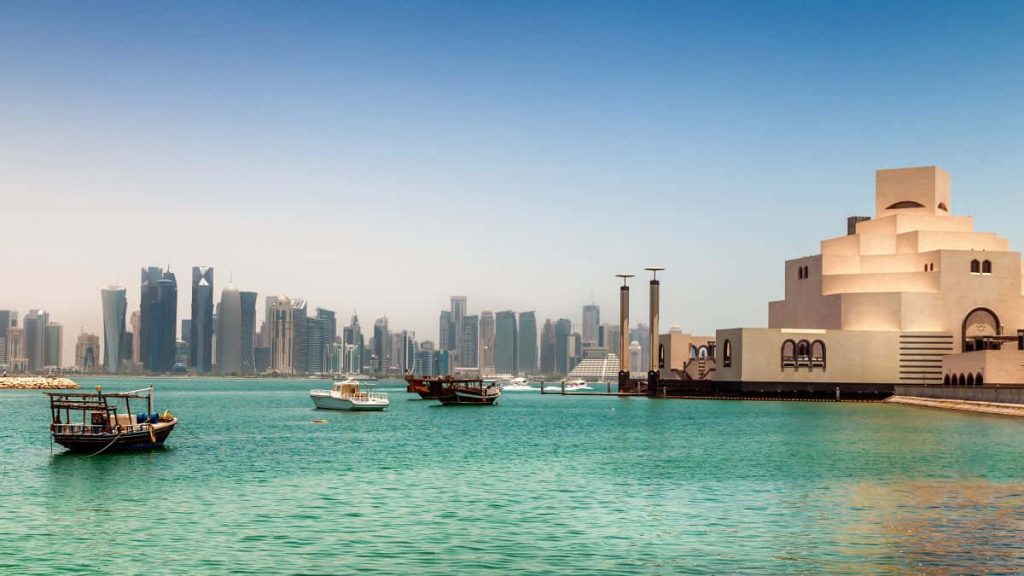
What makes Doha extraordinary as a stopover is the density of exceptional experiences packed into a compact, highly organized city. The Museum of Islamic Art, the futuristic National Museum of Qatar, the traditional Souq Waqif, the glittering skyline of West Bay, and the vast quiet of the Inland Sea are all within easy reach. The city is safe, clean, and exceptionally well-connected a taxi or ride-hailing app will get you anywhere in minutes, and most major attractions cluster near the Corniche waterfront.
If you have already explored the region’s other great transit hubs, be sure to read our guides to the Ultimate Dubai Stopover: 24, 48 & 72 Hours in Pure Luxury and the Istanbul Stopover Guide: 48 Hours of Art, Food & Luxury for comparison but Doha stands entirely on its own.
Doha Stopover Essentials: What to Know Before You Go
Visa: Citizens of over 80 countries including the UK, USA, EU nations, Canada, Australia, and most of Southeast Asia can enter Qatar visa-free for up to 30 days. Other nationalities can obtain a visa on arrival or a pre-approved visa through the Qatar government portal. Always verify current entry requirements before travel.
Getting Around: Doha has a modern Metro system with three lines covering major attractions including the Museum of Islamic Art, Souq Waqif, and the West Bay business district. Taxis are metered and widely available. Ride-hailing apps including Karwa and Uber operate throughout the city. For maximum flexibility during a short stopover, a private car hire is highly recommended.
Currency: The Qatari Riyal (QAR) is pegged to the US Dollar at a fixed rate of approximately 3.64 QAR to 1 USD. International credit cards are widely accepted at hotels, restaurants, and attractions. ATMs are plentiful.
Dress Code: Qatar is a Muslim-majority country with a conservative dress code in public spaces. Shoulders and knees should be covered when visiting souqs, mosques, and government buildings. Swimwear is appropriate at hotel pools and private beaches. Luxury hotels and upscale restaurants are generally relaxed in dress expectations.
Best Time to Visit: November through March offers the most comfortable outdoor temperatures, between 15°C and 25°C. The summer months (June–September) are intensely hot outdoors but are manageable if your itinerary focuses on indoor attractions and air-conditioned spaces.
24 Hours in Doha: The Perfect Luxury Stopover Itinerary
Early Morning Hamad International Airport: The World’s Most Beautiful Terminal
Begin your Doha experience before you even leave the airport. Hamad International Airport is not a place to endure it is a place to explore. The terminal houses Lamp Bear, Ur’s Fischer’s monumental 23-tonne golden teddy bear sculpture, alongside a rotating programmed of major contemporary art installations. The airport’s gardens, luxury retail concourse, and world-class lounges (particularly the Qatar Airways Al Murjan Business Lounge, widely considered the finest airport lounge on earth) make it a genuine destination in its own right.
If your stopover begins early, the Al Mourjan Lounge opens around the clock and offers a full à la carte dining service, spa treatments, showers, sleep pods, and a serene indoor garden a remarkable way to transition from the aircraft into the city.
Morning – The Museum of Islamic Art
Your first stop outside the airport should be non-negotiable: the Museum of Islamic Art (MIA), sitting on its own promontory on the Doha Corniche. Designed by the legendary architect I.M. Pei (his final major building before retirement) and completed in 2008, the museum’s stark geometric white limestone exterior rising from the waters of the Arabian Gulf is one of the most architecturally powerful sights in the entire Middle East.
Inside, the collection spans 1,400 years of Islamic art and civilization manuscripts, ceramics, metalwork, jeweler, textiles, and carved ivory from Spain, Egypt, Persia, Turkey, India, and Central Asia. The central atrium, flooded with natural light through a geometric glass dome, is breathtaking. The MIA Café on the ground floor serves excellent coffee and pastries with a full view of the Doha skyline across the water a perfect way to begin the day.
Allow at least 90 minutes here. The MIA is the cultural heart of Doha and should not be rushed.
Mid-Morning – The National Museum of Qatar
A short taxi ride along the Corniche brings you to the National Museum of Qatar (NMoQ), opened in 2019 and designed by Jean Nouvel in the form of interlocking disc-shaped petals inspired by the desert rose a crystalline mineral formation found in Qatar’s sand. The building alone is one of the most dramatic architectural statements made by any museum anywhere in the world in the past two decades.
Inside, the museum traces Qatar’s history from its ancient geological formation and pearl-diving heritage through the discovery of oil and natural gas to its extraordinary contemporary transformation. Immersive galleries use light, sound, scent, and film alongside remarkable physical artefacts to create an emotional as well as an intellectual journey through the country’s identity. Even travelers with no prior knowledge of Qatar leave with a genuine understanding of what this small peninsula has been — and what it is becoming.
Afternoon – Souq Waqif: Old Doha Lives Here
No Doha stopover is complete without time in Souq Waqif, the city’s historic market district and its most atmospheric corner. The souq has been thoughtfully restored to its traditional mud-plaster and timber-beam architecture and today hosts hundreds of shops selling spices, Arabic perfumes, hand-embroidered textiles, falconry equipment, traditional clothing, antiques, and handicrafts across a warren of narrow lanes.
The Falcon Souq, adjacent to Souq Waqif, is one of the most extraordinary markets in the world — a dedicated trading hub for falcons, the traditional hunting birds of the Arabian Peninsula. Prized falcons change hands here for sums that can reach hundreds of thousands of dollars. Even as a passing visitor, watching the traders examine birds with the practiced eye of a jeweler appraising diamonds is a uniquely Qatari experience.
Lunch in Souq Waqif should be taken at one of the traditional Qatari restaurants lining the open courtyards. Parisa serves exceptional Persian cuisine in an ornate, lantern-lit dining room. For something more casual, the grilled meats and freshly baked khubz (flatbread) from the outdoor stalls are deeply satisfying and authentic.
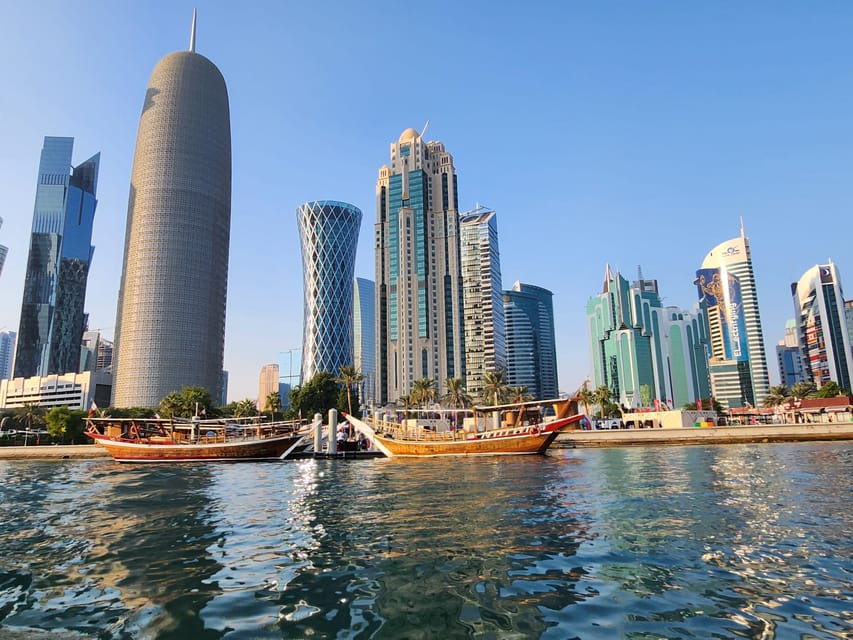
After lunch, stroll toward the Corniche Promenade a sweeping 7-kilometre waterfront walkway that curves along Doha Bay with the glittering West Bay skyline as its backdrop. The view of Doha’s towers reflected in the calm blue water, with traditional dhow boats moored in the foreground, is the city’s most iconic vista and one of the most photographed scenes in the Gulf.
Late Afternoon – Katara Cultural Village and the Pearl-Qatar
From Souq Waqif, head north to Katara Cultural Village, a dedicated complex for the arts, culture, and heritage built around an amphitheater, galleries, a traditional Qatari mosque, and a fine selection of international restaurants facing a private beach. Regular exhibitions, film screenings, and cultural performances make Katara a hub for Doha’s creative community. The architecture a blend of Islamic geometric forms and contemporary design is beautiful in the late afternoon light.
Continue to The Pearl-Qatar, an artificial island development modelled loosely on Monaco’s luxury residential aesthetic. Porto Arabia, the marina district at the heart of the Pearl, is lined with designer boutiques, waterfront restaurants, and superyachts moored in a horseshoe-shaped harbor. It is an entirely constructed environment but a genuinely attractive one and the waterfront promenade makes for a pleasant early evening walk as the sun drops and the lights begin to come on.
Evening – Fine Dining and the Doha Skyline
Doha’s fine dining scene has matured into something genuinely world-class, driven by the city’s extraordinary investment in hospitality and its status as a global events destination following the 2022 FIFA World Cup.
Nobu Doha at the Four Seasons Hotel Doha is the natural choice for a special stopover dinner Nobu Matsuhisa’s Japanese Peruvian cuisine in an elegant waterfront setting, with views across the Bay toward the Corniche. The black cod miso and the signature yellowtail jalapeño are as precisely executed here as in any Nobu restaurant in the world.
For a more intimate and culturally distinctive experience, Jiwan inside the National Museum of Qatar serves modern Qatari and Gulf cuisine that draws on traditional recipes and indigenous ingredients in beautiful surroundings designed to complement the museum’s architecture.
Pre-dinner drinks are best enjoyed at the sky lounge of the W Doha or the rooftop bar of the Banyan Tree Doha in Msheireb Downtown both offering elevated views over the city that put Doha’s astonishing physical transformation into perspective.
End the evening with a traditional Qatari coffee ceremony Gawa, the lightly spiced cardamom coffee served with dates at one of Souq Waqif’s heritage cafés, a quiet and genuinely moving farewell to a city that has earned its place among the world’s great stopover destinations.
Where to Stay: Doha’s Finest Luxury Hotels
Four Seasons Hotel Doha Set on a private beach on the Corniche with views across the bay, the Four Seasons is consistently Doha’s most acclaimed luxury hotel. The outdoor infinity pool, world-class spa, and multiple exceptional restaurants make it the default choice for discerning stopover guests.
Mandarin Oriental Doha Located in the Msheireb Downtown development, the Mandarin Oriental combines the brand’s signature blend of Asian elegance and meticulous service with easy access to the cultural quarter and Souq Waqif.
The St. Regis Doha A palatial property in the West Bay district with a private beach, 24-hour butler service, and one of the most spectacular hotel lobbies in the Gulf region.
Raffles Doha Part of the Katara Hospitality complex, the Raffles brings its legendary white-glove service to a beautifully designed property steps from Katara Cultural Village and the Pearl-Qatar.
Banyan Tree Doha A newer addition to the Msheireb Downtown neighborhood, the Banyan Tree offers a more intimate, design-forward experience with excellent rooftop facilities and a central location ideal for a short stopover.
Optional Add-On: The Inland Sea (Khor Al Adaid)
If your stopover allows for a half-day excursion outside the city, the Inland Sea (Khor Al Adaid) a UNESCO-recognized natural reserve where towering sand dunes meet the salt waters of the Arabian Gulf is one of the most remarkable landscapes in the entire Middle East. Located around 80 kilometers south of Doha, it is accessible only by 4WD across open desert, making a guided dune-bashing excursion the natural way to experience it.
Luxury desert camp operators including Regency and Gulf Adventures offer premium private excursions with gourmet catering, stargazing, and sunset camel rides an experience that contrasts beautifully with Doha’s urban intensity and stays with you long after your flight departs.
Final Thoughts: Doha Deserves More Than a Gate Number
Too many passengers treat Doha as nothing more than a connection point a corridor between gates, a name on a departure board. This guide exists to change that. In 24 hours, Doha will show you one of the world’s great collections of Islamic art, one of its most daring pieces of contemporary architecture, one of its most authentic traditional markets, and a skyline that defines the ambition of a new century.
Step outside the terminal. Doha is ready for you.