
Kuala Lumpur is Southeast Asia’s best-kept secret in the world of luxury travel. While its neighbors Singapore and Bangkok command the headlines, Malaysia’s capital quietly offers something rarer: a city where extraordinary luxury comes without the extraordinary price tag, where cultural depth runs centuries deep beneath a glittering modern skyline, and where the food arguably the greatest street food culture in all of Asia is so good it becomes the primary reason many travelers return again and again. The Passport Stamper
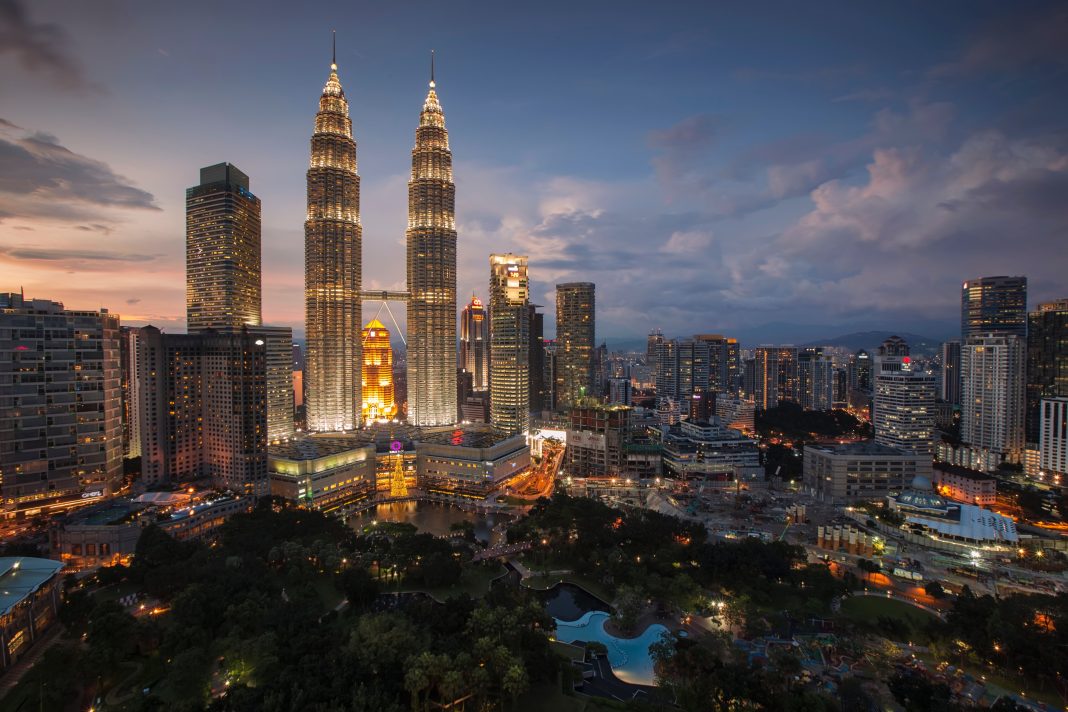
The city announces itself from the air with the twin silver needles of the Petronas Twin Towers, once the tallest buildings in the world and still the most elegant twin-tower structure ever built. Below them spreads a metropolis of six million people shaped by Malay, Chinese, Indian, and colonial British influences a cultural layering that expresses itself most vividly in the food, the architecture, the festivals, and the extraordinary warmth of the people who call it home.
Kuala Lumpur International Airport (KLIA) is a major regional hub served by Malaysia Airlines, AirAsia, and dozens of international carriers, making KL a natural stopover point for travelers between Europe, Australia, the Middle East, and the rest of Southeast Asia. With 48 hours, this city rewards the curious traveler with a depth and generosity of experience that few cities of any size can match.
This Kuala Lumpur stopover guide takes you through two complete days of culture, food, indulgence, and genuine luxury the hidden kind that does not announce itself but stays with you long after your flight departs.
Why Kuala Lumpur Is Southeast Asia’s Most Underrated Stopover City
Kuala Lumpur sits at a fascinating intersection: modern enough to offer world-class hotels, rooftop bars, and contemporary art spaces, yet traditional enough that a five-minute walk from a Michelin-starred restaurant can bring you to a century-old Chinese temple still thick with incense smoke and the murmur of prayer. The city does not perform its heritage for tourists it lives it, every day, in markets and mosques and coffee shops that have operated without interruption for generations.
For the stopover traveler, this means extraordinary value at every level. A suite at a five-star hotel in Kuala Lumpur costs a fraction of the equivalent in Singapore or Hong Kong. A bowl of Penang-style prawn noodle soup at a hawker stall that has been perfecting the same recipe for forty years costs less than a dollar. A spa treatment at one of the city’s luxury wellness centers using indigenous Malaysian botanicals and traditional healing techniques runs at rates that make equivalent treatments in London or Dubai look almost comical.
If you are building a broader regional stopover itinerary, our guides to the Singapore Stopover: 36 Hours in Asia’s Most Luxurious City, the Doha Stopover: 24 Hours in Qatar, the Ultimate Dubai Stopover: 24, 48 & 72 Hours in Pure Luxury, and the Istanbul Stopover: 48 Hours of Art, Food & Luxury offer essential reading but Kuala Lumpur occupies a unique space in this collection, as the city that most consistently surprises even experienced travelers with the quality and range of what it offers.
KL Stopover Essentials: What to Know Before You Go
Visa: Citizens of most Western nations including the UK, USA, EU countries, Australia, Canada, and New Zealand do not require a visa to enter Malaysia for stays of up to 90 days. Most Southeast Asian nationals are also visa-free or obtain a visa on arrival. Always verify current entry requirements at the Malaysian Immigration Department before travel.
Getting Around: Kuala Lumpur has an extensive but somewhat complex public transport network. The KL Sentral transport hub connects the KLIA Express airport rail link (which reaches the city center in 28 minutes) with the LRT, MRT, monorail, and KTM Commuter lines. For a short stopover, a combination of the KLIA Express, the MRT (which covers the Petronas Towers, Bukit Bintang, and Bangsar areas), and Grab ride-hailing is the most practical and efficient approach. Taxis are metered and widely available, though Grab is generally preferred for its pricing transparency.
Currency: The Malaysian Ringgit (MYR) offers exceptional value for international visitors. At current exchange rates, a five-star hotel night, a fine dining dinner, and a full-day spa treatment can all be enjoyed for a combined outlay that would not cover a single comparable experience in London, Tokyo, or Sydney.
Weather: Kuala Lumpur is hot and humid year-round, with temperatures between 27°C and 35°C. Afternoon thunderstorms are common between April and November, often dramatic but brief. Lightweight, breathable clothing and a compact umbrella are essential. The city’s covered walkways, air-conditioned malls, and shaded heritage streets make it very manageable even in peak heat.
Key Neighborhoods:
- KLCC (Kuala Lumpur City Centre) the Petronas Towers, Suria KLCC mall, luxury hotels, and the city’s most polished dining strip
- Bukit Bintang KL’s entertainment and shopping heart; Pavilion mall, Jalan Alor street food, Chang kat bar street
- Chinatown (Petaling Street) heritage shophouses, morning dim sum, Taoist temples, and vibrant street markets
- Brickfields (Little India) garland sellers, Tamil restaurants, textile shops, and Sri Mahamari Amman Temple
- Bangsar the city’s most affluent residential suburb; artisan cafés, independent boutiques, wine bars, and excellent weekend markets
- Masjid India / Kampung Baru the Malay heart of the city; traditional Malay food stalls, batik cloth, and the oldest market in KL
Day One: Icons, Heritage, and the Art of Eating
Morning The Petronas Twin Towers and KLCC Park
Begin at the city’s defining landmark: the Petronas Twin Towers. Designed by Argentine American architect César Pelli and completed in 1998, the towers stand 451.9 meters tall and remain one of the most architecturally refined supertall structures in the world. Their Islamic geometric facades inspired by the star patterns found in traditional Malaysian Islamic design shimmer in the morning sun with a quality that changes throughout the day.
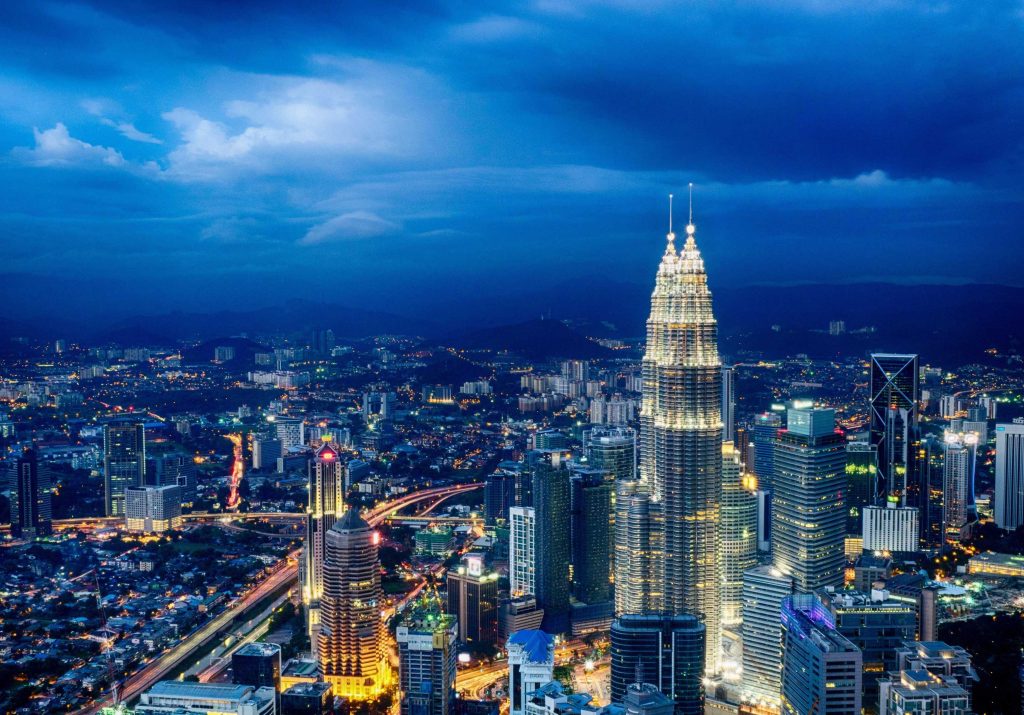
The Skybridge connecting the two towers at Levels 41 and 42, and the Observation Deck on Level 86, are open to visitors via timed tickets purchased in advance. The view from Level 86 looking out over the city’s patchwork of rainforest canopy, mid-rise housing, gleaming towers, and the green lung of KLCC Park directly below is the finest elevated view in Kuala Lumpur.
After the towers, walk through KLCC Park, a beautifully landscaped green space at the base of the towers designed by Roberto Burle Marx. The park’s lake, jogging paths, children’s water play area, and mature rain trees create a surprisingly serene environment just steps from the city’s busiest commercial district. The Suria KLCC shopping mall at the base of the towers is one of Malaysia’s finest retail destinations, with a strong mix of international luxury labels and excellent local design brands.
Mid-Morning Islamic Arts Museum Malaysia
A short taxi ride or grab away from KLCC, the Islamic Arts Museum Malaysia (IAMM) is one of the finest museums of its kind in all of Southeast Asia and criminally overlooked by most stopover itineraries. Its collection of over 12,000 artefacts spans architecture, textiles, jeweler, manuscripts, weaponry, and decorative arts from across the Islamic world Persia, Turkey, India, China, and the Malay Archipelago presented in a beautifully designed building that incorporates Mughal-style domed ceilings and Izik-tiled interiors into its own architecture.
The museum’s reconstructed Ottoman Room, Persian Room, and Indian Room are particularly extraordinary full-scale recreations of historic interior spaces assembled from original architectural elements. Allow at least 90 minutes and do not leave without coffee at the museum’s elegant courtyard café.
Afternoon Chinatown, Petaling Street, and Merdeka Square
Take the MRT to Pasar Seni station and spend your afternoon exploring Kuala Lumpur’s dense, layered historic core. Petaling Street in Chinatown is a covered market of extraordinary energy fabric merchants, dried goods stalls, steamed bun vendors, and souvenir shops packed beneath red paper lanterns along a narrow lane that has operated in roughly this form for well over a century.
Duck into Chan See Shu Yuen Temple at the southern end a beautifully ornate Cantonese clan temple built in 1906 and into the surrounding shophouse streets for some of KL’s best traditional coffee shops (kopitiam), where thick, dark kopi (Malaysian coffee brewed with butter and sugar) is served in enamel cups alongside buttered toast with kaya coconut jam and soft-boiled eggs.
From Chinatown, walk north to Merdeka Square (Dataran Merdeka) the vast colonial-era field where Malaysia’s independence flag was raised at midnight on 31 August 1957. The square is flanked by the magnificent Sultan Abdul Samad Building, a spectacular colonial edifice with Moorish domes and a clock tower, and by the grand Royal Selangor Club. The scale and drama of the surrounding colonial architecture here is genuinely surprising, and the square remains one of the most historically charged public spaces in Southeast Asia.
Evening Jalan Alor and the World’s Greatest Street Food Mile
As darkness falls, Kuala Lumpur’s street food culture reaches its brilliant peak. Jalan Alor in Bukit Bintang is arguably the most famous street food strip in Malaysia a long lane lined with hawker stalls and open-air restaurants that collectively represent a masterclass in Southeast Asian cooking. Arrive hungry and order widely.
Char kway teow from the workstations billowing smoke across the pavement. Grilled stingray wrapped in banana leaf and served with sambal. Wonton noodle soup from the old Chinese stall that has held the same spot for decades. Barbecued chicken wings lacquered in honey and soy. Fresh tropical fruit mango, jackfruit, rambutan from the carts at the lane’s entrance. And, if you are adventurous, durian from the vendors who will cheerfully guide you through the polarizing king of fruits in all its pungent, custard-rich glory.
After dinner, the cocktail bars of Chang kat Bukit Bintang a street of restored heritage shophouses converted into bars, restaurants, and live music venues offer a relaxed and atmospheric way to end the first evening.
Day Two: Rainforest, Refinement, and Hidden Luxury
Morning Batu Caves and the Temple on the Hillside
Begin your second morning early with a visit to the Batu Caves, a series of limestone caverns and cave temples located 13 kilometers north of the city center, reachable by KTM Commuter train in under 30 minutes. A colossal 42.7-metre golden statue of the Hindu deity Lord Murugan guards the base of 272 rainbow-painted steps that climb to the main cave temple the Thaipusam festival site and one of the most important Hindu shrines outside of India.
The main cave itself a vast natural limestone cavern open to the sky, festooned with temple shrines, colored lights, and resident macaque monkeys is a genuinely awe-inspiring space that feels entirely removed from the city below. Arrive before 9am to enjoy the caves before the crowds and make time for the quieter Art Gallery Cave on the left side of the staircase, whose hand-painted murals depicting scenes from Hindu mythology are extraordinary in their detail and color.
Mid-Morning Bangsar and the Art of the KL Brunch
Return to the city and spend your mid-morning in Bangsar, KL’s most refined urban village. The neighborhood’s streets particularly Jalan Telavi and Lorong Marof are lined with the city’s best independent coffee shops, artisan bakeries, wine merchants, and boutique lifestyle stores. This is where Kuala Lumpur’s creative and professional class brunches, and the standard is high.
Pulp by Papa Paleta in Bangsar South is one of the finest specialty coffee operations in Southeast Asia, sourcing directly from Malaysian and regional farms and roasting on-site. Antipodean on Jalan Telavi has served some of Bangsar’s best brunch plates for years. The Bangsar Sunday Market (Pasar Mangu), operating early morning until around noon, is one of the oldest and most beloved neighborhood markets in KL a wonderful source of fresh tropical produce, local snacks, and handcrafted goods.
Afternoon KL Forest Eco Park and the Menara KL Tower
In the heart of the city, pressed against the base of the Menara KL Communications Tower, the KL Forest Eco Park is a 9.37-hectare patch of primary lowland dipterocarp rainforest one of the oldest protected forest reserves in Malaysia, continuously forested for well over a century. Elevated canopy walkways thread through the upper forest at treetop level, offering remarkable close-up encounters with the epiphytic ferns, strangler figs, and bird life of a genuine tropical rainforest that happens to sit within walking distance of a major city’s downtown core.
After the forest, ascend the Menara KL Tower the seventh-tallest telecommunications tower in the world via its observation deck on Level 276 for a panoramic view across the city that is actually superior to the Petronas Towers view in terms of breadth, as you can see both towers from the outside rather than from within them. The glass-floored Sky Deck extension is particularly vertiginous and impressive.
Late Afternoon A Traditional Malaysian Spa Ritual
Kuala Lumpur’s luxury spa culture draws on a rich tradition of Malay herbal healing, Ayurvedic Indian therapy, and Chinese medicine to create treatments that are both deeply effective and genuinely distinctive. No stopover in KL is complete without at least a few hours surrendered to one of the city’s exceptional wellness destinations.
The Mandarin Oriental Kuala Lumpur Spa offers the definitive KL luxury spa experience a full programmed of traditional Malay urus massage, Javanese lulu body scrub using turmeric, rice, and jasmine, and custom herbal compress treatments using fresh Malaysian botanicals. The Malay urus technique slow, firm, deeply intuitive is unlike any European or Thai massage tradition and leaves the body in a state of profound relaxation.
The Spa at Four Seasons KL and the St. Regis Kuala Lumpur Iridium Spa are equally world-class options with similar treatment menus and impeccable facilities.
Evening Fine Dining and the KL Skyline at Night
Kuala Lumpur’s fine dining scene has matured rapidly in recent years, driven by a generation of Malaysian chefs returning from kitchens in London, Copenhagen, and Tokyo with international technique and deep local roots.
Dewakan, consistently ranked among Asia’s 50 Best Restaurants, is the flagship of Malaysian fine dining Chef Darren Teoh’s tasting menu uses exclusively Malaysian and Bornean ingredients, many of them foraged, to create dishes of extraordinary creativity and emotional resonance. The menu changes seasonally and reflects Malaysian biodiversity with a rigor and passion that puts it among the most purposeful fine dining experiences in Southeast Asia.
For a rooftop finale, the Skybar at Traders Hotel KLCC offers some of the finest views of the Petronas Towers available from any venue in the city the towers illuminate at dusk and reflect in the pool beside the bar with a golden drama that makes a fitting close to 48 extraordinary hours in Kuala Lumpur.
Where to Stay: KL’s Finest Luxury Hotels
Mandarin Oriental Kuala Lumpur Directly connected to the Suria KLCC mall and a short walk from the Petronas Towers; the Mandarin Oriental has held the top tier of KL luxury hospitality for decades. Its spa, multiple restaurants, and impeccably maintained rooms remain the benchmark against which other KL hotels are measured.
Four Seasons Hotel Kuala Lumpur Opened in 2018 within the Exchange 106 tower complex; the Four Seasons brings its signature blend of intuitive service and design intelligence to a prime KLCC location. The pool deck and sky lounge are among the finest hotel amenities in the city.
The St. Regis Kuala Lumpur A palatial tower in the KL Sentral district combining Butler Service, an extraordinary spa, and multiple acclaimed dining outlets in a building that makes a genuine architectural statement.
The Majestic Hotel Kuala Lumpur For those who prefer heritage luxury, the Majestic built in 1932 and painstakingly restored offers colonial grandeur, afternoon high tea in the Palm Court, and a sense of layered history that none of KL’s newer towers can replicate.
Rosewood Kuala Lumpur One of the newer additions to KL’s luxury landscape, the Rosewood brings the brand’s distinctive residential sensibility and exceptional food and beverage programming to a prime Bukit Bintang address, with one of the most beautiful hotel lobbies in Malaysia.
Final Thoughts: Kuala Lumpur’s Hidden Luxury Is the Realest Kind
The hidden luxury of Kuala Lumpur is not hidden because it is hard to find. It is hidden because the city does not shout about itself the way Dubai shouts, or the way Singapore presents its perfection to the world. KL’s luxury is woven into the fabric of daily life in the precision of a Chinese pastry chef who has spent forty years mastering one recipe, in the warmth of a hotel concierge who genuinely wants your two days to be perfect, in the view from a rooftop bar where the Petronas Towers glow against a tropical night sky and the entire improbable, magnificent story of modern Malaysia seems to hang in the air between the stars.
Give Kuala Lumpur 48 hours and it will give you a city you will spend years trying to explain to people who have only ever seen the inside of its airport terminal.